Average Retirement Spending in Canada: What's Normal? (2026)
What do Canadian retirees actually spend? A clear 2026 breakdown by category, plus couple vs single — so you can see where your own number lands.

The average Canadian household aged 65+ spends about $78,499 a year — roughly $6,540 a month (Statistics Canada, 2023). That's the household figure: a single retiree typically spends less, and a couple's costs sit near that average rather than double it. It's one of the most common questions in retirement planning, and one of the hardest to answer precisely, because your own number depends on your health, your housing, where you live, and the kind of retirement you want.
National averages are a useful sanity check; your own number is what actually drives the plan — which is where a planning tool helps.
What's RetireZest? A Canadian retirement-planning platform built for the rules retirees actually face — CPP, OAS, GIS, RRSP, RRIF, TFSA, and corporate (CCPC) accounts. It's a planning tool, not a bank or a financial advisor: you enter your numbers, the engine runs a year-by-year simulation under current CRA rules, and you see your retirement laid out from today through your 90s. Free to use; advanced features (PDF reports, Monte Carlo stress testing, the timing optimizer) are an optional paid upgrade. For spending specifically, RetireZest lets you model three retirement phases — active, moderate, and quiet years — with custom amounts and inflation adjustment, so the active-years budget doesn't get averaged across a 30-year retirement.
Fortunately, Statistics Canada tracks what Canadian households actually spend. Here's what the data shows, what it could mean for your plan, and how to start figuring out your own number.
This article is for educational purposes only and does not constitute financial advice. See full disclaimer at the bottom.
Build your personal spending plan →
What Canadian Retirees Actually Spend
Statistics Canada's Survey of Household Spending (Table 11-10-0227-01, 2023 reference year) reports that the average Canadian household headed by someone aged 65 or older spent about $78,499 per year — roughly $6,540 per month. A "household" is the people living in the same home: most often a retired couple, sometimes a single retiree, occasionally a multi-generational home. This is a household-level number, not per person.
For comparison, households headed by someone aged 55–64 (mostly still working) spent $108,221. The roughly $30,000-per-year drop between the two groups reflects a well-documented pattern: spending tends to fall in retirement as commuting, work clothes, child-related expenses, and pre-retirement saving wind down. The drop isn't to zero — and some categories like healthcare and leisure travel often rise — but the overall budget typically shrinks.
A note on the figure: StatsCan's "total expenditure" includes income taxes, RRSP contributions, and pension contributions on top of day-to-day spending. In retirement, those items shrink (lower taxable income, no more RRSP/CPP contributions), so most retirees' day-to-day cost of living is somewhat less than the headline number. Statistics Canada publishes this table periodically — check the source link for the latest reference year.
Where the Money Goes (Age 65+, 2023)
| Category | Annual | Monthly | % of Total |
|---|---|---|---|
| Shelter | $15,703 | $1,309 | 20.0% |
| Food | $8,889 | $741 | 11.3% |
| Transportation | $8,344 | $695 | 10.6% |
| Household operations | $4,573 | $381 | 5.8% |
| Recreation | $3,812 | $318 | 4.9% |
| Healthcare (direct + private insurance) | $3,121 | $260 | 4.0% |
Source: Statistics Canada, Survey of Household Spending, 2023 reference year. Table 11-10-0227-01. Categories shown are the largest by share of total expenditure; minor categories and income taxes (suppressed in this release for 65+) not displayed.
A few things stand out. Shelter is the largest category at 20% — and it varies widely depending on whether you own outright, carry a mortgage, or rent. Transportation at 10.6% may surprise people who picture retirees driving less; for many it stays meaningful because of vehicle ownership, fuel, insurance, and occasional travel. Healthcare, at 4.0% of total expenditure, looks low — but it reflects the all-65+ average, including healthier retirees with employer benefits. Retirees with significant prescription, dental, vision, or long-term care costs typically spend much more (see Healthcare Costs in Retirement Canada).
Why Averages May Not Fit Your Situation
The $78,499 figure is an average across all 65+ households — including retirees who own their homes outright, retirees who rent in Vancouver, couples, and singles. Your actual spending could be quite different.
Factors that push spending higher
- Renting or carrying a mortgage — shelter costs can double compared to owning outright
- Living in a high-cost city — Vancouver, Toronto, and parts of BC/ON have significantly higher shelter and food costs
- Travel in early retirement — the "active" years (65–75) often involve more discretionary spending
- Health issues — dental implants, hearing aids, home care, and prescription drugs could add $5,000–$15,000 per year
- Supporting adult children or grandchildren — a sometimes overlooked expense
Factors that push spending lower
- Owning your home outright — shelter drops to property tax, insurance, and maintenance
- Living in a lower-cost province — Quebec, Manitoba, and the Atlantic provinces tend to have lower costs
- The "moderate" and "quiet" years — spending typically declines after 75 as travel and recreation decrease
- No commute, no work wardrobe — transportation drops significantly
Singles vs Couples
According to Statistics Canada's Canadian Income Survey (2023 data), the median after-tax income for senior families was $79,700/year. For unattached seniors, median after-tax income tends to be significantly lower — roughly half, based on earlier survey years.
Couples may benefit from shared shelter costs, shared vehicle expenses, and pension income splitting. A rough rule of thumb suggests a couple may need about 1.5 to 1.7 times what a single person needs, not double.
For a single retiree, a reasonable starting range might be $30,000–$45,000 per year depending on housing. For a couple, $50,000–$75,000 is a common range. But these are starting points — your actual number depends on the factors above.
The Three Phases of Retirement Spending
Retirement isn't one long period with constant spending. Many planners — and RetireZest — model three phases:
Active years (typically 60–74)
This is often when spending is highest. Travel, dining out, hobbies, home renovations, and helping family are common. Some retirees spend more in these years than they did while working, because they have time.
Moderate years (typically 75–84)
Spending gradually declines. Less travel, less driving, more time at home. But healthcare costs may start to rise, partially offsetting the savings.
Quiet years (typically 85+)
Discretionary spending often drops significantly. Healthcare and potential long-term care may become the dominant expenses. Some retirees in this phase spend very little beyond shelter, food, and medical costs — while others face large care-home bills.
This is why a single spending number for "retirement" may be misleading. RetireZest lets you set different spending targets for each phase, which may produce a more realistic projection than assuming flat spending for 30 years.
Curious if your savings can fund the lifestyle you want? RetireZest builds a comprehensive plan around your three-phase spending — active, moderate, and quiet years — and shows you whether your nest egg holds up across 30+ years of inflation, taxes, and market swings. (Many retirees also wrestle with the opposite worry — holding back too much out of caution.)
→ Try RetireZest free — no credit card required.
How to Estimate Your Own Number
Rather than using the national average, start with what you actually spend today. Then adjust:
Step 1: Track your current spending. Look at the last 12 months of bank and credit card statements. Many people overestimate discretionary spending and underestimate fixed costs.
Step 2: Remove work-related costs. Commuting, work clothes, lunches out, professional dues, CPP/EI contributions. These typically go away in retirement.
Step 3: Add retirement-specific costs. Travel plans, increased healthcare, home maintenance you've been deferring, hobbies you want to pick up.
Step 4: Adjust for housing. If you'll have your mortgage paid off by retirement, your shelter costs may drop by $1,000–$2,000/month. If you plan to downsize, factor in the sale proceeds and lower ongoing costs — our guide to downsizing your home in retirement walks through the principal residence exemption and what the move actually frees up.
Step 5: Account for inflation. At 2% inflation, $60,000 today is equivalent to roughly $73,000 in 10 years. RetireZest adjusts spending for inflation automatically in every simulation.
How Government Benefits Fit In
CPP and OAS may cover a meaningful portion of retirement spending, but for many Canadians they don't cover all of it.
| Benefit | Maximum Monthly (2026) | Average Monthly |
|---|---|---|
| CPP (age 65) | $1,507.65 | ~$804 |
| OAS (age 65–74, full 40 years residency) | $762.50 | Varies by years in Canada |
| GIS (single, if eligible) | up to ~$1,139 | Varies |
Source: Service Canada. CPP average as of Oct 2025. OAS and GIS are for Q4 2026 (Oct–Dec). Amounts are updated quarterly.
A couple both receiving average CPP ($804/month each) and full OAS ($744/month each, which requires 40 years of Canadian residency) might get roughly $37,150/year combined. Against an average 2023 total expenditure of $78,499, that could leave a gap of about $41,000/year — though some of that is income tax and contributions retirees mostly aren't paying anymore, so the practical day-to-day gap is smaller. Either way, the difference comes from savings — RRSP/RRIF, TFSA, non-registered accounts, or corporate accounts.
For more on how much savings you need to fill that gap, see our guide on how much to retire in Canada. For strategies on which accounts to draw first, see RRSP vs TFSA in retirement.
What About Healthcare?
Provincial health insurance generally covers doctor visits and hospital stays, but many retirement healthcare costs may not be covered:
- Dental care — cleanings, implants, dentures
- Vision — glasses, cataract surgery (varies by province)
- Prescription drugs — partially covered in some provinces, not in others
- Hearing aids — $2,000–$6,000 per pair
- Home care — personal support workers, if needed
- Long-term care — nursing homes may cost $2,000–$8,000/month depending on province and level of care
The Statistics Canada average of $3,450/year for healthcare may not reflect the experience of all retirees, especially those over 80. If you don't have employer retiree benefits, some planners suggest budgeting $5,000–$10,000/year for healthcare in later years — though this varies significantly by province and individual health.
How RetireZest Helps
RetireZest models your spending across all three phases (active, moderate, quiet) and projects whether your savings — combined with CPP, OAS, and any other income — may cover it. The simulation accounts for:
- Inflation-adjusted spending year by year
- Provincial tax differences (all provinces and territories)
- CPP/OAS timing — when to start affects how much you receive
- OAS clawback — high income can reduce your OAS
- Withdrawal strategy — the order you draw from RRIF, TFSA, and other accounts may change your tax bill
- Monte Carlo stress testing — what happens if markets drop early in your retirement
Instead of guessing whether $60,000/year is enough, you can model your actual situation.
RetireZest distills all of this into a Zest Score — a 0-to-100 retirement-readiness score, similar in spirit to a credit score for your retirement. It measures four pillars: whether your plan survives, how much you'll pay in lifetime tax, how big your retirement cushion is, and how reliably your spending plan gets met. The score gives you a single number to track over time as you adjust your spending, savings, and start dates for CPP and OAS.
See how your spending plan holds up →
Key Takeaways
- The average Canadian household aged 65+ spent $78,499/year in 2023, according to Statistics Canada
- Shelter (22%), food (12%), and transportation (9%) are the three largest categories
- Spending typically declines with age, but healthcare costs may rise — especially after 80
- CPP and OAS may cover roughly $30,000–$38,000/year for a couple, potentially leaving a gap that savings would need to fill
- Your personal number depends on housing, province, health, and lifestyle — national averages are a starting point, not a target
- Modeling three spending phases (active, moderate, quiet) may produce more realistic projections than assuming flat spending
Frequently asked questions
How much do Canadian retirees spend per year?
According to Statistics Canada's Survey of Household Spending (2023 reference year), the average Canadian household aged 65 or older spent about $78,499 per year, or roughly $6,540 per month. That is noticeably less than the $108,221 spent by households aged 55 to 64.
What are the biggest expenses in retirement in Canada?
According to Statistics Canada (2023 reference year, age 65+), shelter is the largest category at 20.0% of the budget ($15,703/year), followed by food at 11.3% ($8,889/year) and transportation at 10.6% ($8,344/year). Direct healthcare plus private insurance averages 4.0% ($3,121/year), though this can be higher for retirees with significant dental, vision, or prescription costs.
Does spending go down in retirement?
On average, Statistics Canada data suggests it does. In the 2023 reference year, Canadian households aged 65 and older spent about 27% less than households aged 55 to 64 ($78,499 versus $108,221). Spending tends to decline further after age 75 as travel and recreation decrease, though healthcare costs may partially offset the savings.
Compare your spending plan to your savings
Enter your own three spending phases and see whether the money keeps up — year by year.
Test my spending freeThis article is for educational purposes only and does not constitute financial, tax, or legal advice. The Statistics Canada figures cited are from the 2023 Survey of Household Spending (Table 11-10-0227-01, released May 2025) and the 2024 Canadian Income Survey. Government benefit amounts are approximate 2026 figures and are updated annually by Service Canada. Your actual spending and income will depend on your individual circumstances, province, and health. RetireZest is not a registered financial advisor, dealer, or tax professional. Always consult licensed professionals before making financial decisions.
Related Articles
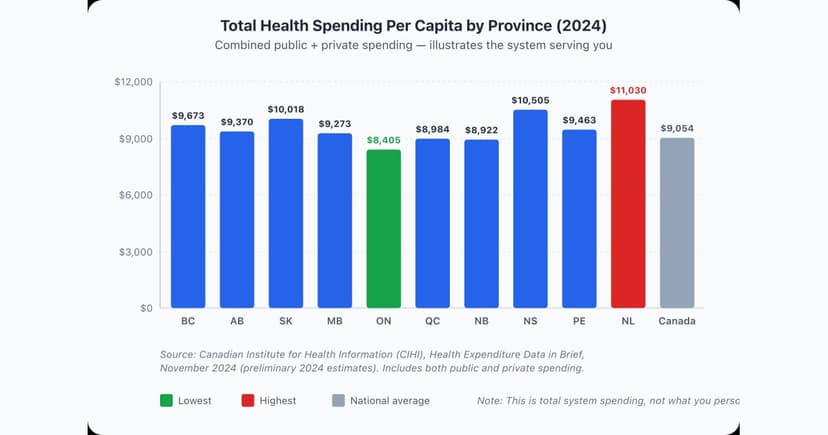
Healthcare Costs in Retirement Canada (2026 Budget Guide)
What should Canadian retirees budget for healthcare? Roughly $2,000–$6,000/year per person out of pocket, plus drug and long-term care costs by province.

You Have Permission to Spend It (Retirement in Canada)
Many Canadian retirees underspend for years out of quiet worry. A gentle look at why — and how seeing your own numbers can give you room to enjoy it.
Can I Retire at 60 in Canada? What Actually Decides It
Retiring at 60 means five years before OAS and a CPP decision at minus 36%. What actually decides whether it works — and how to test it on your numbers.